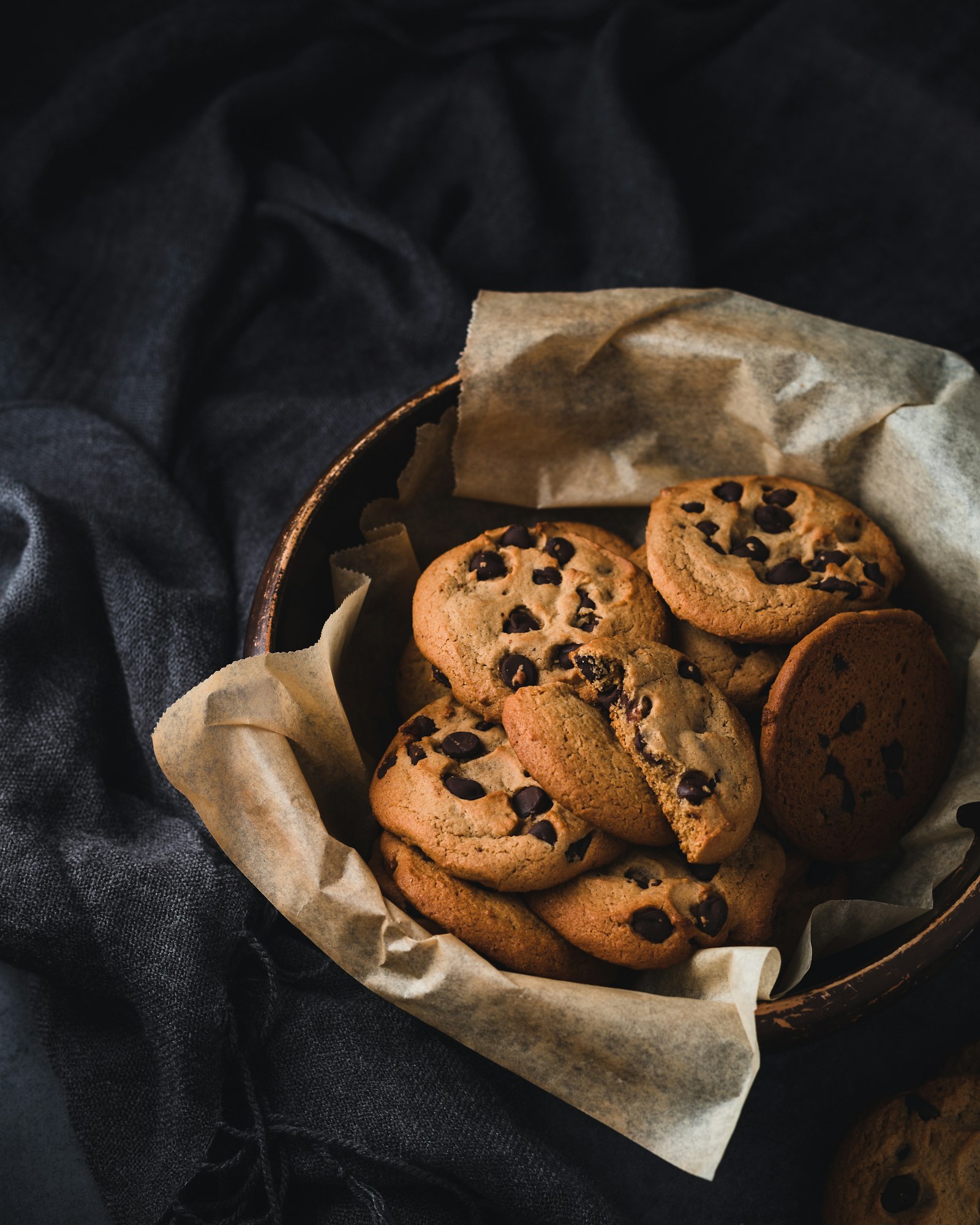
Every cookie at the studio starts with brown butter. Every one. The dark chocolate, the Biscoff, the Nutella core, the New York. If you bit into a cookie from a ChocoBot tin and thought what is that flavour I can't quite name, that's it.
Brown butter is the difference between a good cookie and a cookie someone remembers. It is also the easiest thing in the world to ruin. There is an eight-second window between perfect and burnt. Skip it, and you've made a regular cookie. Push past it, and you've made an ashtray.
"You can't shortcut brown butter. You have to stand there and watch."
What is actually happening in the pan
When you melt butter, three things separate: water, milk solids, and fat. Water boils off first; you'll hear sputtering and see foam on top. Once the water's gone, the milk solids drop to the bottom of the pan and start cooking. That is the magic part. Those milk solids, the proteins and sugars in butter, brown like a piece of toast. Maillard reaction. The colour goes pale yellow → straw → amber → mahogany. The smell goes butter → milk → caramel → nut → roast.
The window between "caramel-nut" (perfect) and "roast" (burnt and bitter) is about eight seconds.
The five stages, in detail
i.
0–2 min · MELTING
Butter sweats
Butter melts. Nothing happens yet. You can step away. You can also not.
ii.
2–5 min · FOAM
Loud, white foam on top
The water inside the butter is boiling off. This is noisy and bubbly. The butter underneath is pale yellow. Don't trust it; the milk solids haven't even started yet. Swirl the pan occasionally so nothing sticks.
iii.
5–7 min · QUIET
The foam dies down
This is when you start paying attention. The pan goes quiet. The smell shifts from butter to milk. Tilt the pan and you'll see the milk solids at the bottom: little brown specks. They're going to be the flavour.
iv.
7–8 min · THE WINDOW
Caramel, nut, perfect
The smell hits you like a wave. Caramel, hazelnut, toasted bread. The butter is amber. The milk solids at the bottom are deep brown. This is it. Take it off the heat immediately. Pour it into a heat-safe bowl. Don't even take the time to find the bowl now; find it before.
v.
8 min + · GONE
Acrid, bitter, ruined
If you leave it on the heat past the eighth minute, the milk solids burn. The whole batch turns acrid. There is no saving it. Don't try to use "just slightly burnt" brown butter; you will taste the burnt in every single cookie. Start over.
The seven things that go wrong
- The pan is too dark. A stainless steel pan lets you see the butter colour as it changes. A black non-stick pan hides everything until it's too late. Use stainless.
- The heat is too high. Medium. Always medium. High heat skips the milk-solid stage and goes straight to burnt.
- You walked away. Don't. You have less than 60 seconds of "safe" time once stage iii begins. The smell is the warning. If you've walked into another room, you've already lost the cue.
- You left it in the hot pan. Even after you turn off the heat, the pan stays hot and keeps cooking the butter. Pour it out immediately into a cool bowl. The residual heat in the pan can push you from "perfect" to "burnt" in fifteen seconds with the burner off.
- You used salted butter and added more salt. Salted butter is fine, but adjust the salt in your recipe down. Brown butter concentrates everything, including salt.
- You didn't let it cool before using. Hot brown butter melts your sugar and changes the dough texture. Cool it to room temperature, or even chill it lightly, before mixing.
- You scraped the bottom too aggressively. The browned milk solids are the flavour. Get them all out of the pan. But don't scrape after pouring, you'll add bits of dried-on butter that taste sandy.
How to use it once you have it
Cool the brown butter to room temperature (about 20 minutes on the counter). It should be soft, not liquid, not solid. The colour should still be amber.
Then use it in a cookie recipe that calls for melted butter. Don't substitute it for cold butter; the temperature matters as much as the flavour. The ratio is one-to-one with whatever butter your recipe calls for, but reduce the salt by about 25% because brown butter intensifies it.
The first time you do this right, you'll wonder why every cookie isn't made this way.
"It's eight minutes of standing over a pan. That's the whole technique. There is no shortcut."
Why I bother telling you all this
Brown butter is the kind of thing that home bakers skip because the recipe says "melted butter" and they're in a hurry. Skip it, and you get a fine cookie. Do it, and you get a cookie someone remembers in the car ride home.
I bake every cookie at the studio with brown butter. Always have. Every Mini Cookie Tin, every Viral 7", every Biscoff cookie that lands on a doorstep in Mumbai. That smell is in there, in every bite, doing the work of two ingredients.
If you make one change to your home baking this month, make it this.
Love,
Gunjan